Easy French Macaron Recipe-Perfect Delicate Cookies
French macaron recipes are often seen as the holy grail of delicate baking, and for good reason. These exquisite little cookies, with their perfectly smooth tops, ruffled ‘feet’, and impossibly light, chewy centers, are a testament to both precision and artistry. They’re the kind of treat that whispers elegance, a jewel-toned delight that transforms any occasion into something truly special. Have you ever found yourself mesmerized by their vibrant colors and wondered, “Could I really make these at home?” The answer is a resounding yes! While the reputation of the French macaron might be one of intimidation, I’m here to demystify the process and guide you through creating your own batch of these beloved confections. Forget store-bought pretenders; we’re diving into the delightful world of crafting authentic French macarons that will impress your friends, family, and most importantly, yourself.
French Macaron Recipe
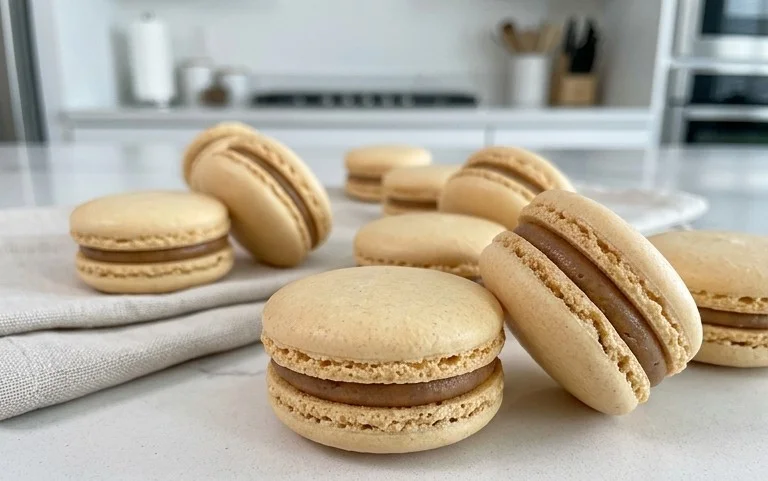
Making French macarons can seem daunting, but with a little patience and precise technique, you can achieve those beautiful, delicate, and utterly delicious little sandwich cookies. These iconic French treats are characterized by their crisp, smooth shells and chewy interior, typically filled with a rich buttercream, ganache, or jam. This recipe will guide you through creating perfect macarons, step by step. Remember, accuracy in measurement and temperature is key to success!
Ingredients:
Preparing Your Workspace and Ingredients
Before you begin extract, it’s crucial to have everything ready. This recipe relies on precision, so having all your ingredients measured and your equipment prepped will make the process much smoother. Ensure your egg whites are at room temperature; this helps them whip up into a stable meringue. If you’re short on time, you can gently warm them by placing them in a bowl over a pot of simmering water (don’t let the water touch the bottom of the bowl) for a few minutes, then let them cool down completely before using. For the almond flour and powdered sugar, sifting them together is essential to remove any lumps and ensure a fine, even texture for your macaron shells. This step prevents grainy or uneven shells.
Making the Macaronage: The Batter
The macaronage is the process of folding the dry ingredients into the meringue. This is perhaps the most critical stage where you can either overmix or undermix, both of which can lead to failed macarons.
Step 1: Create the Meringue
In a clean, dry bowl of a stand mixer fitted with the whisk attachment, add your room temperature egg whites. Begin extract whipping them on medium speed until they become frothy. Gradually add the granulated sugar, a tablespoon at a time, while the mixer is still running. Continue to whip on medium-high speed until stiff, glossy peaks form. This means that when you lift the whisk, the meringue should stand straight up without drooping. This process can take anywhere from 5 to 10 minutes, depending on your mixer. If you’re using food coloring, now is the time to add it. Add the drops of liquid-gel food coloring to the meringue and whip for another minute or two until the color is evenly distributed and vibrant.
Step 2: Combine Dry Ingredients with Meringue
In a separate bowl, whisk together the sifted almond flour, powdered sugar, and salt. Now, it’s time to combine these dry ingredients with your meringue. Add about one-third of the dry mixture to the meringue. Gently fold it in using a rubber spatula, using a motion that scrapes the sides and bottom of the bowl and then folds the batter over itself. The goal here is to incorporate the dry ingredients without deflating the meringue too much.
Step 3: The Crucial Folding (Macaronage)
Continue adding the remaining dry ingredients in two more additions, folding after each. This is where the “macaronage” truly happens. You want to fold until the batter reaches a lava-like consistency. To test for the correct consistency, lift your spatula; the batter should fall off in a thick, continuous ribbon that slowly melts back into itself within about 20-30 seconds. If the batter is too stiff, it will create lumpy shells. If it’s too runny, the shells will spread too much and be flat. This is a feel you develop with practice, so don’t be discouraged if your first batch isn’t perfect. Gently fold in the vanilla extract at this stage as well.
Piping and Resting
Once your macaronage is ready, it’s time to shape them and let them rest, which is crucial for developing the “feet” of the macaron.
Step 4: Piping the Macaron Shells
Transfer your macaron batter to a piping bag fitted with a plain round tip (about 1/2 inch in diameter). Line two baking sheets with parchment paper or silicone baking mats. If using parchment paper, you can draw circles on the underside as a guide, ensuring you leave about an inch between each piped macaron. Hold the piping bag perpendicular to the baking sheet and pipe small rounds of batter, about 1 to 1.5 inches in diameter. Stop squeezing before lifting the bag to avoid creating peaks.
Step 5: Tapping and Resting the Shells
After piping all your macarons, firmly tap the baking sheets on your countertop several times. This helps to release any trapped air bubbles and further encourages the batter to settle into smooth rounds. Any remaining small peaks can be gently smoothed down with a damp fingertip. Now comes a vital resting period. Let the piped macarons sit at room temperature for at least 30 minutes to an hour, or until they form a dry skin. You should be able to gently touch a macaron and have it not stick to your finger. This skin formation is essential for the macarons to rise properly and develop their signature feet during baking.
Baking Your French Macarons
The baking process requires careful temperature control and timing.
Step 6: Baking the Macaron Shells
Preheat your oven to 300°F (150°C). Place one baking sheet at a time on the middle rack of your preheated oven. Bake for 12-15 minutes. The macarons are ready when the shells have developed their feet and the tops are firm and do not wobble when gently touched. They should lift easily off the parchment paper or silicone mat when they are completely cooled. If they stick, they need a little more time. Keep an eye on them, as oven temperatures can vary.
Step 7: Cooling and Filling
Once baked, carefully remove the baking sheet from the oven and let the macarons cool completely on the baking sheet before attempting to remove them. Once cooled, gently peel them off the parchment paper or silicone mat. Match up similarly sized shells. You can then fill them with your prepared Vanilla Buttercream Frosting or your preferred filling. Pipe a dollop of filling onto the flat side of one shell and gently sandwich it with another.
Maturing Your Macarons
For the best flavor and texture, it’s recommended to let your filled macarons mature in the refrigerator. Place them in an airtight container and chill for at least 24 hours. This allows the flavors to meld and the shells to soften slightly, creating that perfect chewy texture. Enjoy your homemade French macarons!
Conclusion:
Mastering the delicate art of the French macaron might seem daunting at first, but with this comprehensive French macaron recipe, you’re well on your way to creating these exquisite, melt-in-your-mouth confections. The joy of baking French macarons lies in their versatility and undeniable elegance. They are the perfect treat to impress guests at a tea party, to elevate a dessert table, or simply to enjoy as a special indulgence. The crisp outer shell yielding to a chewy interior, paired with a creamy ganache or buttercream, is a symphony of textures and flavors that is truly unparalleled.
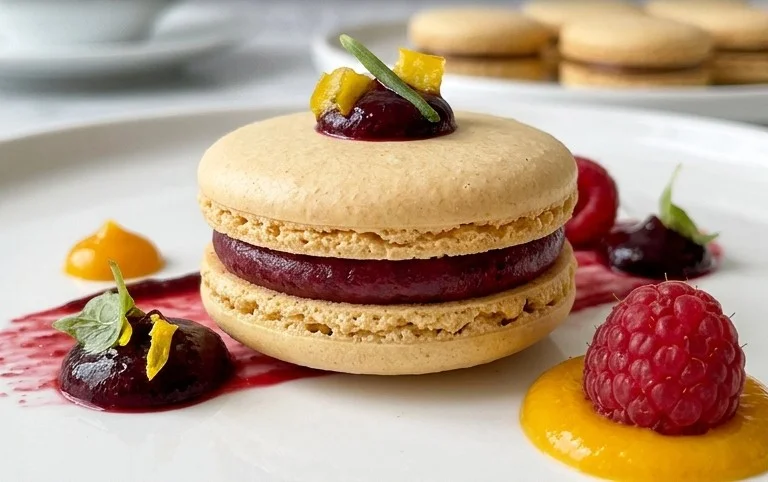
Don’t hesitate to experiment with different flavorings and colors to personalize your macarons. From classic vanilla bean and rich chocolate to vibrant raspberry or zesty lemon, the possibilities are endless. Consider sandwiching your macarons with a delicate lavender-honey buttercream for a sophisticated twist, or a tangy passion fruit curd for a burst of tropical flavor. So go ahead, gather your ingredients, embrace the process, and experience the satisfaction of baking your very own beautiful French macarons. You’ve got this!
Frequently Asked Questions:
Why are my French macarons cracking?
Cracking often occurs if the oven temperature is too high or if you don’t let the macaron shells rest long enough to form a skin before baking. Ensure your oven is accurately calibrated and that you’ve allowed at least 30-60 minutes for the shells to dry to the touch.
My macarons don’t have “feet.” What went wrong?
The signature “feet” of a macaron are formed by the batter’s consistency and the oven’s heat. If your batter is overmixed or undermixed, or if the oven isn’t hot enough, the feet may not develop. Proper macaronage (the folding technique) and correct oven temperature are crucial for achieving those perfect little feet.
Can I make French macarons dairy-free?
Yes! You can adapt this French macaron recipe by using a dairy-free buttercream or ganache. For the shells themselves, ensure your almond flour is pure and free from any dairy additives. Many excellent dairy-free chocolate options are available for your fillings.
French Macaron Recipe
A classic French macaron recipe with a delicate shell and a sweet filling.
Ingredients
-
150 grams sifted super-fine almond flour
-
180 grams powdered sugar
-
1/4 teaspoon salt
-
120 grams large egg whites (at room temperature)
-
60 grams granulated sugar
-
4 drops liquid-gel food coloring
-
1 teaspoon pure vanilla extract
-
Vanilla Buttercream Frosting or your choice of filling
Instructions
-
Step 1
Combine sifted almond flour and powdered sugar in a food processor and pulse until finely ground. Sift this mixture into a bowl to remove any lumps. -
Step 2
In a clean, grease-free bowl, whisk egg whites until foamy. Gradually add granulated sugar, whisking continuously until stiff, glossy peaks form (meringue). -
Step 3
Gently fold the almond flour and powdered sugar mixture into the meringue in three additions. Add food coloring and vanilla extract during the last addition and fold until a thick, lava-like batter forms. -
Step 4
Transfer the batter to a piping bag fitted with a round tip. Pipe small, uniform circles onto parchment-lined baking sheets. -
Step 5
Tap the baking sheets firmly on the counter several times to release air bubbles. Let the piped macarons rest at room temperature for 30-60 minutes until a skin forms. -
Step 6
Preheat oven to 300°F (150°C). Bake for 15 minutes, or until the macarons are firm and have developed ‘feet’. -
Step 7
Let the macarons cool completely on the baking sheets before removing. Once cooled, pair matching shells and fill with your choice of frosting.
Important Information
Nutrition Facts (Per Serving)
It is important to consider this information as approximate and not to use it as definitive health advice.
Allergy Information
Please check ingredients for potential allergens and consult a health professional if in doubt.